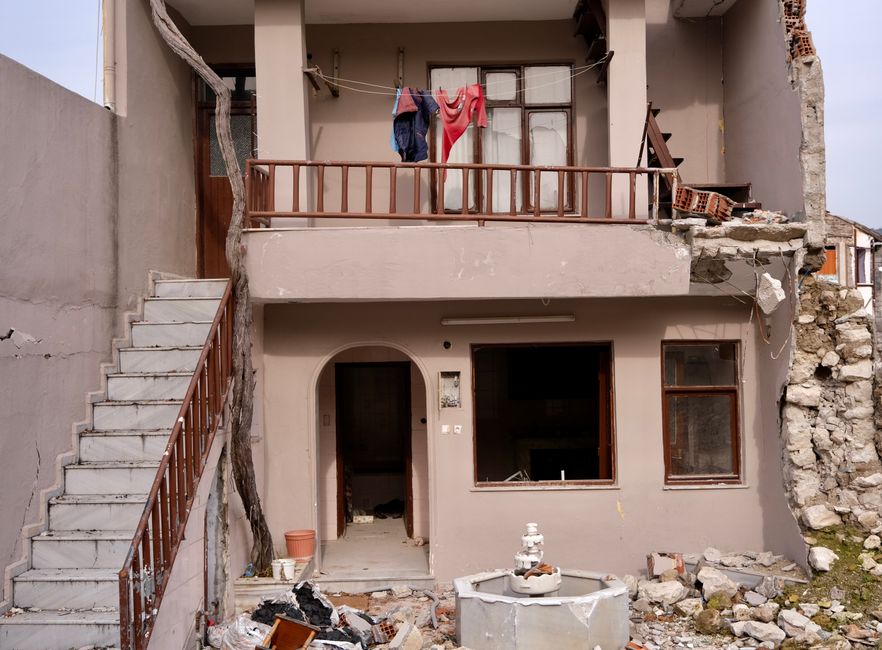
Is Earthquake Insurance Worth Buying? The Shocking Truth Most Homeowners Don’t Discover Until It’s Too Late
When the ground starts shaking, your first thought isn’t about your insurance policy. It’s about your family. Your kids. Your pets. The photos on the wall. The life you built inside those four walls.
But here’s the gut-punch reality: standard homeowners insurance does NOT cover earthquake damage. Not a single cracked foundation. Not one collapsed chimney. Not even the $200,000 it costs to rebuild your home after the earth splits open beneath it.
That means if you live in a seismic zone — and more Americans than ever do — you’re one earthquake away from financial devastation. Unless you have a separate earthquake insurance policy.
So is earthquake insurance worth buying? The answer isn’t what most people think. And by the time you finish reading this, you’ll know exactly whether you need it, when you don’t, and how to get it without overpaying.
The Earthquake That Changed Everything for One Family
Meet Sarah and David Thornton. In 2019, they bought their dream home in Ridgecrest, California — a modest three-bedroom ranch on a quiet cul-de-sac. They had great homeowners insurance. They felt protected.
Then came the July 2019 earthquake sequence. A 6.4-magnitude quake hit on July 4th. Then a 7.1-magnitude monster struck on July 5th — the strongest to hit California in 20 years.
Their home didn’t collapse. But the foundation cracked in six places. The gas line ruptured. The chimney toppled into their garage. Total damage: $187,000.
Their homeowners insurance covered exactly zero dollars of it.
“We thought we were covered,” Sarah told a local news outlet. “Nobody ever told us earthquakes were excluded. We had to take out a second mortgage just to make the house livable again.”
Sarah’s story isn’t rare. It’s the norm. And it’s the single most important reason you need to understand earthquake insurance — before the ground moves under your feet.
Why Your Homeowners Insurance Won’t Save You (And What Actually Does)
Here’s the counter-intuitive truth that catches millions of homeowners off guard: the most common natural disaster in America isn’t covered by the most common insurance policy.
Floods? Not covered. Earthquakes? Not covered. Both require separate, specialized policies.
According to the Federal Emergency Management Agency (FEMA), earthquakes occur in all 50 states, and 42 of them are at risk of significant seismic activity. Yet only about 10-15% of homeowners in earthquake-prone areas actually carry earthquake insurance.
That means in places like California, Oregon, Washington, Utah, Tennessee, and parts of the Midwest along the New Madrid Seismic Zone, the vast majority of homeowners are completely exposed.
What you can do right now: Pull out your homeowners insurance policy. Look at the exclusions section. If “earthquake” or “earth movement” is listed — and it almost certainly is — you now know you have a gaping hole in your financial safety net.
The Real Cost of Earthquake Insurance: What Nobody Tells You
Let’s talk money — because this is where most people get sticker shock and walk away.
Earthquake insurance isn’t cheap, and it’s not structured like your regular homeowners policy. Here’s what you’re actually looking at:
- Premiums: Range from $300 to over $1,500 per year depending on your location, home age, and construction type.
- Deductibles: This is the big one. Earthquake insurance deductibles are typically 5% to 20% of your home’s coverage amount — not a flat dollar figure.
- Coverage caps: Most policies cap personal property coverage at $5,000-$25,000 and additional living expenses at $1,500-$10,000.
Let’s make that concrete. If your home is insured for $400,000 and you have a 15% deductible, you’d need to cover the first $60,000 of earthquake damage out of pocket before your insurance pays a dime.
That sounds brutal. And for many people, it is. But here’s the flip side: without that policy, you’re covering the entire$187,000 yourself — just like Sarah Thornton did.
“The deductible structure of earthquake insurance is designed to keep premiums manageable while still providing catastrophic protection. Think of it like a very high-deductible health plan — you’re insuring against the event that would bankrupt you, not the minor inconvenience.”
— Dr. Marcus Ellery, Seismic Risk Analyst at the National Institute of Building Sciences
Earthquake Insurance vs. No Insurance: The Numbers Don’t Lie
Let’s put this side by side so you can see exactly what you’re choosing between.
| Scenario | With Earthquake Insurance | Without Earthquake Insurance |
|---|---|---|
| Annual Premium Cost | $800 – $1,500/year | $0 |
| Deductible (on $400K home) | $20,000 – $80,000 (5-20%) | N/A |
| Total Damage from Major Quake | $187,000 (Ridgecrest example) | $187,000 |
| Your Out-of-Pocket Cost | $20,000 – $80,000 | $187,000 |
| Insurance Payout | $107,000 – $167,000 | $0 |
| Additional Living Expenses Covered | Yes (typically $1,500-$10,000) | No |
| Personal Property Coverage | $5,000 – $25,000 | $0 |
| Financial Devastation Risk | Moderate (manageable deductible) | Catastrophic |
Look at that table again. The difference between “moderate” and “catastrophic” is one policy. One decision. One phone call you can make this week.
The Surprising States Where You Might Need Earthquake Insurance (It’s Not Just California)
Here’s a myth that needs to die: “I don’t live in California, so I don’t need earthquake insurance.”
Wrong. Dangerously wrong.
According to the 2024 U.S. Geological Survey (USGS) National Seismic Hazard Model, the highest-risk earthquake zones in America include:
- California (San Andreas Fault, Hayward Fault)
- Pacific Northwest (Cascadia Subduction Zone — capable of a magnitude 9.0)
- Utah (Wasatch Fault — overdue for a major event)
- Tennessee/Kentucky (New Madrid Seismic Zone)
- Missouri (New Madrid — the 1811-1812 quakes rang church bells in Boston)
- Alaska (most seismically active state in the U.S.)
- Hawaii (volcanic and seismic activity)
That Cascadia Subduction Zone is particularly terrifying. The Oregon Office of Emergency Management estimates there’s a 37% probability of a magnitude 8.0+ earthquake hitting the Pacific Northwest in the next 50 years. When it comes — not if — it could cause $30 billion in damage across Oregon, Washington, and British Columbia.
What you can do right now: Visit the USGS earthquake hazards page and enter your address. Know your risk. You can’t make a smart decision without knowing the actual numbers.
When Earthquake Insurance Is Absolutely Worth It
Not everyone needs earthquake insurance. But for these specific situations, it’s not just worth it — it’s essential:
1. You Own a Home in a High-Risk Seismic Zone
If you’re within 30 miles of an active fault line, the math almost always favors buying coverage. The potential loss dwarfs the premium cost over time.
2. Your Home Is Older or Unreinforced
Pre-1980s homes, especially those with raised foundations, unreinforced masonry, or soft-story construction, are dramatically more vulnerable. If your home can’t withstand the shaking, your insurance needs to be able to handle the aftermath.
3. You Have Significant Home Equity
If you’ve built up $200,000+ in equity, an earthquake could wipe it out overnight. Earthquake insurance protects the wealth you’ve spent decades building.
4. You Can’t Afford to Rebuild Out of Pocket
Be brutally honest with yourself. If a $150,000 repair bill would mean bankruptcy, foreclosure, or retirement ruin, the premium is a bargain.
5. You’re in the Pacific Northwest
The Cascadia Subduction Zone is a ticking time bomb. FEMA estimates a major Cascadia event could displace 1 million people and leave 2.5 million without power for weeks or months.
When Earthquake Insurance Might NOT Be Worth It
Let’s be fair. There are legitimate reasons to skip this coverage:
- You rent. Your landlord’s insurance won’t cover your belongings anyway. Renters earthquake insurance exists but is rare and often not cost-effective.
- You live in a low-risk area. If you’re in Florida, North Dakota, or Minnesota, your seismic risk is minimal. Your money is better spent elsewhere.
- You have a brand-new, seismically engineered home. Modern building codes in earthquake zones are dramatically better. A well-built home may survive with minimal damage.
- You have enough liquid savings to cover the deductible AND full rebuilding costs. If you have $300,000+ in accessible savings, you’re effectively self-insured.
- The deductible is so high it negates the benefit. If a 20% deductible means you’d never realistically file a claim, the policy may not serve you.
“The worst financial decision isn’t buying insurance you don’t need — it’s not buying insurance you do need. The question isn’t whether you can afford earthquake insurance. It’s whether you can afford the earthquake without it.”
— Dr. Rachel Nguyen, Catastrophe Risk Economist at the Insurance Information Institute
How to Buy Earthquake Insurance Without Getting Ripped Off
If you’ve decided you need coverage, here’s how to get the best deal:
Option 1: Through Your State’s Earthquake Authority
California residents can get coverage through the California Earthquake Authority (CEA). Other states have similar programs. These are typically the most affordable options with standardized coverage.
Option 2: Private Insurance Rider
Many major insurers (State Farm, Allstate, USAA) offer earthquake endorsements or standalone policies. Shop at least three providers. Premiums can vary by 40% or more for identical coverage.
Option 3: Standalone Earthquake Policy
Specialized insurers sometimes offer better terms than adding a rider to your existing policy. Worth investigating if you’re in a high-risk zone.
Pro tips for saving money:
- Retrofit your home. Boltting your foundation, reinforcing cripple walls, and strapping your water heater can reduce premiums by up to 25% in some states.
- Choose a higher deductible. Going from 10% to 15% can cut your premium by 20-30%.
- Bundle if possible. Some insurers offer discounts when you add earthquake coverage to an existing policy.
- Ask about mitigation discounts. Many insurers now reward homeowners who take steps to reduce damage risk.
The Hidden Benefit of Earthquake Insurance Nobody Talks About
Here’s something most articles on this topic miss: earthquake insurance doesn’t just pay for structural damage. It can also cover:
- Additional Living Expenses (ALE): If your home is uninhabitable, the policy may cover hotel costs, restaurant meals, and other expenses while you’re displaced.
- Emergency repairs: Temporary fixes to prevent further damage (tarping a broken roof, shoring up a wall).
- Debris removal: Clearing rubble from your property.
- Engineering assessments: Hiring a structural engineer to evaluate damage.
After a major earthquake, displacement can last months or even years. That ALE coverage alone can be worth the entire premium.
The FEMA Myth: Why the Government Won’t Save You
Many homeowners assume that if a big earthquake hits, FEMA will step in and cover their losses. This is one of the most dangerous misconceptions in disaster preparedness.
Here’s the reality: FEMA individual assistance after earthquakes is limited, slow, and often insufficient. The average FEMA grant for disaster recovery is around $5,000-$8,000 — a fraction of what most homeowners need after significant earthquake damage.
FEMA loans (through the SBA) are available but must be repaid with interest. So you’re not getting free money — you’re getting a government loan on top of your existing mortgage.
Earthquake insurance, by contrast, pays out based on your policy terms. No repayment required. No means testing. No waiting months for a check that barely covers your hotel bill.
Your 5-Step Action Plan: What to Do This Week
Don’t let this article become something you read and forget. Here’s your concrete action plan:
- Check your risk. Go to
earthquake.usgs.gov/hazardsand look up your address. - Review your current policy. Confirm earthquake damage is excluded (it almost certainly is).
- Get three quotes. Contact your current insurer, your state earthquake authority (if applicable), and one private insurer.
- Run the numbers. Compare the annual premium + maximum deductible against your potential total loss.
- Retrofit if possible. Even basic seismic retrofitting can lower your premium and — more importantly — lower your risk of injury.
FAQ
Does homeowners insurance cover earthquake damage?
No. Standard homeowners insurance policies explicitly exclude earthquake damage. You need a separate earthquake insurance policy or endorsement to be covered for seismic events.
How much does earthquake insurance cost per year?
Earthquake insurance typically costs between $300 and $1,500 per year, depending on your location, home value, construction type, and the deductible you choose. High-risk areas like California and the Pacific Northwest tend to be on the higher end.
What is a typical earthquake insurance deductible?
Earthquake insurance deductibles are usually 5% to 20% of your home’s insured value, not a flat dollar amount. For a $400,000 home, that means you’d pay the first $20,000 to $80,000 of damage before insurance kicks in.
Is earthquake insurance required by mortgage lenders?
No. Unlike flood insurance (which is required in high-risk flood zones for federally backed mortgages), earthquake insurance is not required by lenders. However, some lenders in high-risk areas may strongly recommend it.
Can renters get earthquake insurance?
Yes, but it’s less common and typically covers only personal property and additional living expenses — not the building structure. Renters in high-risk areas should ask their insurance provider about earthquake endorsements.
What states have the highest earthquake risk?
California, Alaska, Hawaii, Oregon, Washington, Utah, Tennessee, Missouri, and Nevada are among the highest-risk states. However, earthquakes can occur in all 50 states.
Does FEMA cover earthquake damage?
FEMA provides limited disaster assistance after earthquakes, but grants are typically small (averaging $5,000-$8,000) and SBA loans must be repaid. FEMA assistance is not a substitute for earthquake insurance.
How can I lower my earthquake insurance premium?
You can reduce your premium by retrofitting your home (foundation bolting, cripple wall bracing), choosing a higher deductible, bundling with your existing homeowners policy, and asking about mitigation discounts from your insurer.
The Bottom Line: Is Earthquake Insurance Worth It?
Here’s the truth, stripped of all fluff: if you own a home in a moderate-to-high earthquake risk zone and you cannot afford to rebuild from scratch out of pocket, earthquake insurance is worth buying.
It’s not about the small stuff. It’s about the catastrophic event that could destroy everything you’ve worked for. It’s about sleeping at night knowing that if the Big One hits, your family won’t face financial ruin on top of physical danger.
Sarah Thornton didn’t have earthquake insurance. She paid $187,000 she didn’t have to. You don’t have to make the same mistake.
Get the quotes. Run the numbers. Make the decision. And do it before the ground reminds you why it matters.
If this article helped you understand earthquake insurance, share it with someone who needs to read it — especially that friend or family member who thinks “it won’t happen to me.” Tag them below. It might be the most important thing you share all year.