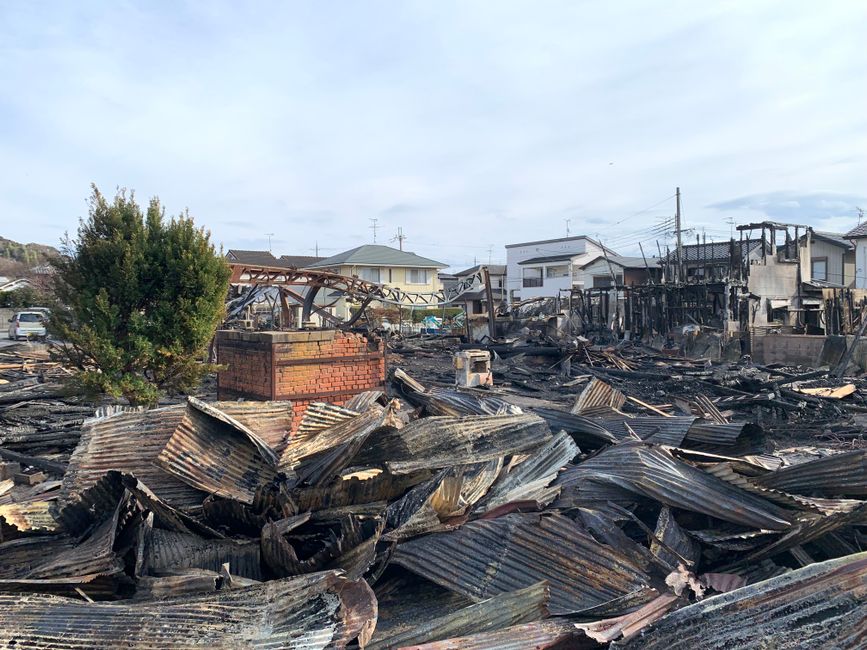
Home Insurance Actual Cash Value vs Extended Replacement: The Shocking Truth Most Homeowners Miss Until It’s Too Late
You signed the papers. You paid the premiums. You felt safe. Then the storm hit—and the check that arrived was $47,000 short of what you needed to rebuild.
This isn’t a hypothetical nightmare. It’s exactly what happened to Marcus and Danielle Reeves in suburban Atlanta after a tornado tore through their neighborhood in March 2024. Their homeowner’s insurance policy covered their house for $350,000—the amount they’d carefully calculated based on their home’s market value. But when the adjuster arrived, the payout wasn’t $350,000. It was $218,000.
Why? Because their policy paid out based on actual cash value, not the full replacement cost. The difference—$132,000—was the depreciation the insurance company subtracted for their 12-year-old roof, aging HVAC system, and worn flooring. The Reeves family was left scrambling, taking out a second mortgage just to make their home livable again.
If you own a home, this single distinction—actual cash value vs. extended replacement cost—could be the difference between rebuilding your life and financial ruin. And most homeowners don’t understand it until disaster strikes.
Let’s fix that right now.
What Is Actual Cash Value? (And Why It Might Be a Trap)
Actual cash value, or ACV, sounds straightforward. It’s the current market value of your home and belongings minus depreciation. Your insurance company looks at what your house or possessions are worth today—not what it would cost to replace them new.
Here’s the problem: depreciation is brutal. A roof that cost $15,000 to install 10 years ago might only be “worth” $5,000 in the eyes of an adjuster. Your five-year-old kitchen appliances? Depreciated by 40-60%. That leather sofa you bought for $3,000? Maybe $800 on an ACV claim.
The takeaway: ACV policies are cheaper upfront but can leave you dangerously underinsured when you need coverage most. If your policy says “actual cash value,” read the fine print—or better yet, call your agent today and ask exactly how depreciation is calculated.
What Is Extended Replacement Cost Coverage?
Extended replacement cost coverage is the upgrade most financial advisors quietly recommend. Instead of paying depreciated value, this coverage pays the full cost to rebuild or replace your home and belongings with materials of similar kind and quality—even if that cost exceeds your policy limit.
Most extended replacement policies offer 125% to 150% of your dwelling coverage limit. So if your home is insured for $400,000, you could receive up to $500,000 or $600,000 to rebuild, depending on your policy terms.
This matters more than you think. According to a 2024 report from the National Association of Insurance Commissioners, construction costs have risen 34% since 2020, and in disaster-prone areas, rebuilding costs can spike even higher due to demand surges and material shortages. A policy that seemed generous five years ago might be woefully inadequate today.
The takeaway: Extended replacement cost coverage is your safety net against inflation, supply chain disruptions, and unexpected rebuilding expenses. If you don’t have it, you’re gambling with your biggest financial asset.
The Myth That “Replacement Cost” Means Full Protection
Here’s where it gets counterintuitive—and where most homeowners get blindsided.
Many people assume that if they have “replacement cost” coverage, they’re fully protected. Not necessarily. Standard replacement cost policies have a hard cap: your dwelling coverage limit. If rebuilding costs exceed that limit—even by $10,000—you’re on the hook for the difference.
Extended replacement cost coverage removes that cap, adding a buffer. But even this isn’t foolproof. Some policies exclude certain perils, impose waiting periods, or require you to rebuild on the same site. Others won’t cover code upgrades required by local building departments—which can add $20,000 to $50,000 to a rebuild in older neighborhoods.
The takeaway: “Replacement cost” is not a magic phrase. Ask your insurer: Does my policy include extended replacement? What’s the buffer percentage? Are code upgrades covered? If you can’t get clear answers, it’s time to shop around.
A Side-by-Side Comparison: ACV vs. Extended Replacement Cost
Let’s make this crystal clear. Here’s how the two coverage types stack up:
| Feature | Actual Cash Value (ACV) | Extended Replacement Cost |
|---|---|---|
| Payout Basis | Current market value minus depreciation | Full rebuild/replace cost, up to 125-150% of dwelling limit |
| Depreciation Deducted? | Yes—often 20-50% depending on age | No—pays full replacement cost |
| Coverage Cap | Policy limit (minus depreciation) | 125% to 150% of policy limit |
| Typical Premium Cost | Lower (15-30% cheaper) | Higher, but often only 10-20% more than standard replacement |
| Best For | Rental properties, older homes you wouldn’t fully rebuild | Primary residences, high-value homes, disaster-prone areas |
| Risk of Being Underinsured | Very High | Low |
| Code Upgrade Coverage | Usually excluded | Often included (check policy) |
The takeaway: If your home is your primary residence, extended replacement cost coverage is almost always worth the modest premium increase. The peace of mind alone is priceless.
The Emotional Cost of Being Underinsured
Numbers tell part of the story. But the human cost is what keeps insurance professionals up at night.
Dr. Elena Vasquez, a consumer insurance policy analyst at the Institute for Homeowner Protection, puts it bluntly:
“We see families every year who thought they were covered, only to discover their ACV policy leaves them tens of thousands short. The financial stress compounds the trauma of losing a home. It’s preventable—and it’s heartbreaking.”
Consider the Reeves family again. Marcus told a local news outlet that the insurance shortfall forced them to delay their daughter’s college fund contributions for two years. “We did everything right,” he said. “We just didn’t know the difference between actual cash value and replacement cost. Nobody explained it to us.”
That’s the real danger: the gap between what you think you have and what you actually have. It’s not just about money. It’s about stability, security, and the ability to recover without financial catastrophe.
The takeaway: Don’t wait for a disaster to test your coverage. Review your policy this week. If you’re unsure what you have, call your agent and ask for a coverage explanation in plain language.
5 Actionable Steps to Protect Your Home Right Now
Knowledge without action is just trivia. Here’s what you can do today:
- Pull out your policy declarations page. Look for the phrases “actual cash value,” “replacement cost,” or “extended replacement cost.” If you see ACV on your dwelling coverage, flag it immediately.
- Call your insurance agent. Ask: “Does my policy include extended replacement cost coverage? What percentage buffer do I have? Are building code upgrades covered?” Write down the answers.
- Get a current rebuild estimate. Contact a local contractor or use an online calculator to estimate what it would cost to rebuild your home today—not what you paid for it. Compare that number to your dwelling coverage limit.
- Consider an inflation guard rider. Many insurers offer automatic annual increases to your coverage limit to keep pace with rising construction costs. It’s usually inexpensive and worth it.
- Document everything. Photograph every room, every valuable item, every upgrade. Store the photos in the cloud. If you ever file a claim, this documentation can mean the difference between a fair payout and a lowball offer.
The takeaway: These five steps take less than an hour. They could save you tens of thousands of dollars and months of stress. Do them this weekend.
Why This Matters More in 2024 and Beyond
The insurance landscape is shifting. Climate change is increasing the frequency and severity of natural disasters. Supply chain disruptions continue to push construction costs higher. And according to a 2024 study by the Insurance Information Institute, nearly 60% of U.S. homeowners are underinsured by at least 20%.
That’s not a typo. More than half of American homeowners don’t have enough coverage to fully rebuild. And the majority of them don’t know it.
James Whitfield, a veteran insurance adjuster with 22 years of field experience, has seen the trend firsthand:
“After every major disaster, I meet homeowners who are shocked by their payout. They assumed their policy would cover everything. But ACV policies, combined with rising costs, create a perfect storm of underinsurance. The industry needs to do a better job explaining this—and homeowners need to ask harder questions.”
The bottom line: the cost of being wrong is rising every year. What was adequate coverage in 2020 might be dangerously insufficient in 2024. Extended replacement cost coverage isn’t a luxury—it’s becoming a necessity.
The takeaway: Treat your homeowner’s insurance like a living document. Review it annually. Adjust for inflation, renovations, and market changes. Your future self will thank you.
The Bottom Line: Don’t Let a Technicality Destroy Your Financial Future
Home insurance isn’t exciting. Nobody gets excited about reading policy documents. But the difference between actual cash value and extended replacement cost coverage is one of the most consequential financial decisions you’ll make as a homeowner.
ACV is cheaper. It’s simpler. And it can leave you devastated when you need help most.
Extended replacement cost coverage costs a little more. It requires a little more attention. But it protects your home, your family, and your financial future in ways that ACV simply cannot.
The Reeves family learned this the hard way. You don’t have to.
Review your policy. Ask the right questions. Upgrade your coverage if needed. And sleep better knowing that if the worst happens, you’ll be able to rebuild—not just survive.
FAQ
What is the difference between actual cash value and extended replacement cost?
Actual cash value (ACV) pays the depreciated value of your home or belongings—meaning the insurance company subtracts for age and wear. Extended replacement cost coverage pays the full cost to rebuild or replace your home, typically up to 125% to 150% of your policy’s dwelling coverage limit, without deducting depreciation.
Is extended replacement cost coverage worth the extra premium?
For most primary residences, yes. The additional premium is typically 10-20% more than standard replacement cost coverage, but it provides a critical buffer against rising construction costs, inflation, and unexpected rebuilding expenses. Given that nearly 60% of homeowners are underinsured, the extra protection is often worth the modest cost.
Can I switch from actual cash value to extended replacement cost?
In most cases, yes. Contact your insurance agent or company and request a policy endorsement or upgrade. You may need to provide updated information about your home’s condition and value. The sooner you make the switch, the better protected you’ll be.
Does extended replacement cost cover building code upgrades?
Many extended replacement cost policies include coverage for required building code upgrades, but this varies by insurer and policy. Always confirm with your agent whether code compliance costs are included, as these can add $20,000 to $50,000 to a rebuild in older neighborhoods.
How often should I review my home insurance coverage?
Experts recommend reviewing your homeowner’s insurance policy at least once a year, or whenever you make significant renovations, purchase expensive items, or experience major market changes in your area. An annual review ensures your coverage keeps pace with rising construction costs and your evolving needs.
If this post opened your eyes to a coverage gap you didn’t know you had, share it with every homeowner you know. Tag a friend or family member who needs to see this—because the best time to fix your insurance is before disaster strikes, not after.